Expert stroke care when every second counts
Award-winning Primary Stroke Centers
When it comes to stroke, time is critical—and so is the quality of care. At Holy Cross Health, we are dedicated to delivering fast, expert treatment that saves lives and improves long-term outcomes.
Our hospitals in Germantown and Silver Spring are both nationally recognized as Primary Stroke Centers, equipped with specialized teams and advanced protocols to provide immediate, high-quality stroke care. Both locations have earned the American Heart Association/American Stroke Association Gold Plus Quality Achievement Award, reflecting our unwavering commitment to excellence in stroke treatment and recovery.
Warning signs & risks
Minutes count in stroke treatment
Stroke is always a medical emergency. It can happen suddenly, at any time. Recognizing the warning signs and calling 911 right away can save a life and improve recovery—even in the case of a mini-stroke (TIA or trans-ischemic attack).
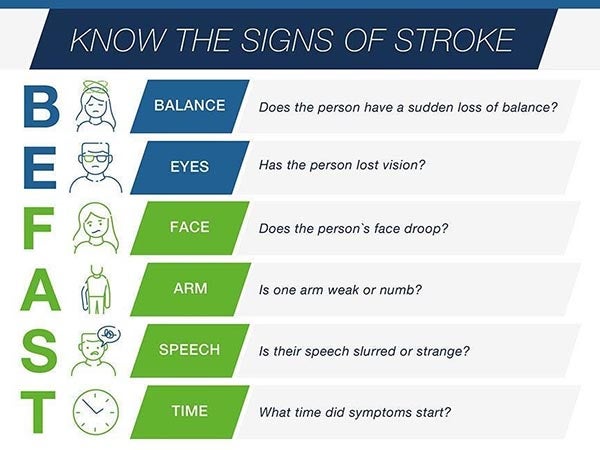 Knowing the risk factors for stroke can often help you avoid having one, with modifications to your lifestyle and/or medical support. While some are out of your control—such as gender, race or family history of stroke—you can lower other risks with regular exercise, eating well, maintaining a healthy weight and quitting smoking.
- High blood pressure
- High cholesterol
- Diabetes
- Heart disease
- Atrial fibrillation
- Smoking
Stroke response team
At Holy Cross Health, your care begins the moment you arrive in our Emergency Room. Our dedicated Stroke Response Team is on call 24/7 to rapidly assess and treat patients showing signs of stroke.
Early diagnosis and intervention are critical. In many cases, treatment may begin with a clot-busting medication called Tenecteplase (TNK). When administered within 4 1⁄2 hours of symptom onset, TNK can dissolve the blood clot causing the stroke and restore blood flow to the brain, significantly improving outcomes and reducing the risk of long-term disability.
In addition, within 24 hours of symptom onset, patients are evaluated for a large vessel occlusion—a severe condition caused by a blockage in a major artery, such as the internal carotid or middle cerebral artery. If identified, you may be a candidate for endovascular intervention—a minimally invasive, non-surgical procedure that can remove the clot and help restore brain function.
Stroke care at Holy Cross Health offers several key advantages that support faster treatment and better outcomes:
- Advanced Primary Stroke Center designation, recognizing excellence in diagnosis, treatment and care coordination.
- Dedicated Stroke Response Team and protocols.
- Access to state-of-the-art diagnostic tools and interventions to remove or dissolve blood clots.
- Neuro ICU and rehabilitation specialists to support your recovery journey.
Stroke treatment and recovery
Comprehensive stroke care that goes beyond the emergency
Holy Cross Health delivers advanced, accredited stroke care that meets the highest standards of clinical excellence. For patients experiencing complex or life-threatening strokes, care is provided in Silver Spring’s Neuro Critical Care Unit or Germantown’s Critical Care Unit, both of which are equipped to handle the most serious patient needs.
Our approach is holistic—addressing not just the physical effects of stroke, but also the emotional and social impact it can have on patients and their families. We understand that stroke can disrupt work, independence and daily life, which is why we focus on helping each patient recover as fully as possible.
Emergency treatment
Stroke care starts in the emergency room. Patients may receive:
- Clot-busting medications (TNK) – given through an IV to dissolve clots in ischemic strokes.
- Interventional neuroradiology – used to treat both ischemic and hemorrhagic strokes.
- Thrombectomy – a minimally invasive procedure to remove clots and restore blood flow.
- Endovascular procedures – to treat blood vessel abnormalities, including brain aneurysms, in order to prevent brain bleeds.
- Surgery – when needed for life-threatening cases.
Rehabilitation
Our team of physical medicine and rehabilitation physicians, therapists, physiatrists, neurologists, hospitalists and intensivists works together to assess your condition and develop a personalized recovery plan focused on restoring function and quality of life. Your recovery plan may include:
- Physical, occupational and speech therapies to regain strength, mobility and communication skills.
- Support from a multidisciplinary team of nurses, therapists, social workers, care managers and dietitians.
- Education and resources to help lower your risk of a future stroke, including our stroke educational booklet.
Continuing care
Recovery from stroke continues well beyond the hospital stay. At Holy Cross Health, we help ensure a smooth transition by connecting patients to the next phase of the recovery journey, which may include:
- Outpatient rehabilitation programs for continued physical, occupational and speech therapies.
- Home care services that provide therapy and support in the comfort of your home.
With our team-based, patient-centered approach, Holy Cross Health is dedicated to helping stroke survivors regain independence and enhance their quality of life as they move forward.