EmpowerMoms promotes safer pregnancies during Black Maternal Health Week
April 15, 2026Categories: Blog Posts
 Black women in the United States are nearly three times more likely to experience serious complications during pregnancy and childbirth, increasing the risk for maternal and infant mortality.
During Black Maternal Health Week, programs like EmpowerMoms at Holy Cross Health are working to change the narrative by equipping expecting mothers of all backgrounds with the knowledge to recognize warning signs of conditions like preeclampsia and gestational diabetes—and the confidence to advocate for their own care.
EmpowerMoms is a free, fully virtual health education series that’s open to Holy Cross patients and the wider community. Over three classes, each lasting one-and-a-half hours, participants learn about an all-encompassing range of topics. These include nutrition, mental health and the potentially lifesaving understanding of preeclampsia, a blood pressure disorder that can cause stroke or organ failure, and gestational diabetes symptoms.
Knowing the warning signs
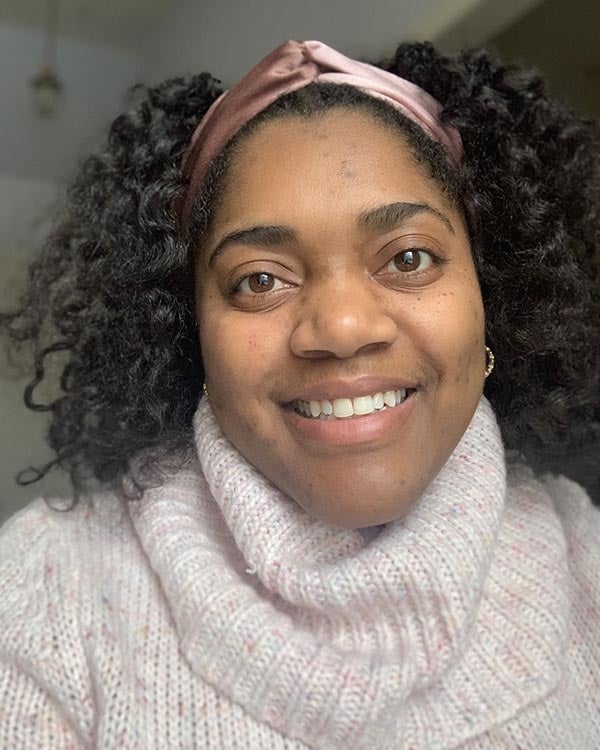
For Ashley Ashman, of Montgomery County, who is expecting her first baby this summer with her husband, EmpowerMoms helped her feel more prepared to notice if something is wrong.
“I learned a lot about how preeclampsia can show up differently in people,” says Ashman. “I already have a history of high blood pressure and I’m medicated for it, so that might not be the best indicator for me. But shortness of breath or excessive swelling—those are things that might show up for me.”
Ashman leaned on the instructors for support when she was feeling anxious about having to take a three-hour glucose test for gestational diabetes. Speaking with them ahead of time allowed her to know what would take place, significantly lessening her fear.
“Just talking it through with them was really beneficial,” says Ashman. “And it was great to chat with them about other things, too, like the importance of exercise and how to not beat yourself up if, one day, you don’t have a lot of energy to do it. They said to try again the next day or when you feel better. I’m now more mindful about exercise, what I’m eating, hydration. Plus, the program helped me engage in conversations with my husband. He’s a firefighter, so he’s trained in extreme emergency situations. These classes help us talk about what to look for on a day-to-day basis.”
A collaborative effort
The program is unique in that it’s taught by two doulas—India Hunter and Akilah Witherspoon. Both were asked to lend their expertise to EmpowerMoms and were thrilled to do so. According to Hunter, EmpowerMoms is a great example of how clinical staff and the birth worker community can collaborate for the benefit of expecting mothers.
“Most health education courses that are taught by clinical staff are jargon heavy. When working with the team, we made updates and suggestions about how to word and frame certain things so it could be easily digestible for the community,” says Hunter. “The classes are still medical based. There’s still medical terminology about preeclampsia and gestational diabetes, what they are and how they’re diagnosed. But we were able to find a simplistic way to deliver that information and make it more impactful for the moms who participate.”
In addition to the doulas, two community health workers are on hand for participants who would like to schedule one-on-one conversations. During these chats, the CHW can help connect mothers to any resources they might need, whether it’s food, financial support or something else.
Flexibility and incentives
For those who join EmpowerMoms, the class schedule is extremely flexible, with sessions available on nights and weekends. Most participants complete the three courses within a few weeks or months. Once finished, they receive a blood pressure cuff and can choose a gift—either a car seat or portable crib—which is delivered to their home.
“The knowledge itself is already invaluable, but then getting that gift [a car seat] at the end was a nice touch and made me feel really happy,” says Ashman. “It was our first baby gift.”
After completing EmpowerMoms, participants are also invited to take a newly added fourth-trimester class, for those who have already delivered or will be delivering soon. This special course is geared toward participants’ postpartum health—what to expect and be aware of as their body heals, mood disorders and how to care for their newborn with diaper changes, feeding and bathing.
Changing the statistics
Through it all, EmpowerMoms participants gain a sense of empowerment, as the program’s name suggests. They learn that it’s okay—and possibly lifesaving—to speak up and advocate for themselves. For Witherspoon, instilling this in expecting mothers is extremely important … especially for Black moms.
“Even though there’s these statistics that Black moms and babies are three times more likely to experience adverse events, that’s not something that has to happen. It can change when a woman is informed, knows what to expect and knows how to navigate and make choices along the way that will support her outcome,” says Witherspoon. “Nobody has to be a victim of these statistics.”
As Black Maternal Health Week celebrates its ninth year, Ashman is happy to see programs like EmpowerMoms working to change the norm and help Black moms feel more joy—and less fear—as they embark on their pregnancy journey.
“Having EmpowerMoms available is monumental because it is a safe place to talk about things that are already worrying us or in the back of our mind, while also sharing tools, strategies and information that’s not only focused on the negative or high-risk things. It’s also just general ways to care for yourself and your baby,” says Ashman. “Participate. You have nothing to lose. Take that time to invest in you and your baby, and meet some other new moms, doulas and community health workers who can help you during this crazy, amazing, beautiful, scary time.”